













Section 1: Specs Basic Knowledge: Volts (V), Amps (A), Watt-Hours (Wh) Explained
Volts (V)
Voltage is the electrical pressure that drives power to your motor. Think of it as water pressure in a pipe — higher voltage means more potential force. Common e-bike voltages are 36V, 48V, 52V, and 72V. Higher voltage generally means a faster, more powerful ride. Voltage must match your motor's rated input.
Amp-Hours (Ah)
Amp-hours measure how much electrical charge the battery can store — essentially the size of the fuel tank. A 15Ah battery holds 50% more charge than a 10Ah battery at the same voltage. Common ranges are 10Ah to 21Ah for city e-bikes, and higher for touring or cargo bikes.
Watt-Hours (Wh)
Watt-hours are the most meaningful single number — they measure total usable energy. Wh = Volts × Amp-hours. A 48V × 15Ah battery = 720Wh. The higher the Wh, the farther you can ride per charge. Entry-level bikes typically carry 250–400Wh; long-range models go 500Wh and beyond.
Quick Formula to Remember
— Example: 48V × 12.5Ah =
600Wh(a solid long-range city battery)
When comparing two batteries, always compare Wh — not just voltage or amp-hours in isolation.
Section 2: Cost — How Much Does an E-Bike Battery Cost?
| Tier | Price Range | Typical Capacity | Cell Quality | Expected Cycles |
|---|---|---|---|---|
| Entry-level / Generic | $80 – $200 | 250 – 375Wh | Tier-3 cells | 300 – 500 cycles |
| Mid-range OEM | $250 – $480 | 375 – 500Wh | Tier-2 cells | 500 – 700 cycles |
| Premium branded Popular | $500 – $750 | 499 – 720Wh | Top-tier cells | 700 – 1,000 cycles |
| High-capacity touring | $750 – $1,200+ | 720 – 1,000Wh+ | Top-tier cells | 800 – 1,000+ cycles |
When budgeting, factor in that a higher-quality battery typically costs less per kilometre over its full lifetime — even if the upfront price is steeper. Cheap cells often degrade to 70% capacity within 2 years, while premium cells retain 80%+ capacity after 1,000 cycles. Also note that OEM replacement batteries from brand-specific dealers (e.g., Bosch, Shimano EP8, Fiido) carry a premium but guarantee full compatibility and warranty coverage.
⚠️ Watch Out For

Section 3: Lifespan — How Long Does an E-Bike Battery Last?
When buying a second-hand e-bike, battery age alone does not tell the complete story. A three-year-old battery with proper storage and charging habits may still perform well, while a newer battery that was poorly maintained can lose capacity much faster.
If you are evaluating a used e-bike, our Used E-Bike Battery Checklist: Key Things to Check Before You Pay explains how to inspect battery history, real-world range, voltage sag, charger condition, and replacement costs before making a purchase.
🔑 Key Factors Affecting Battery Lifespan
🔄 Charge Cycles
⚡ Charging Habits
🌡️ Storage & Temperature
🏆 Cell Quality
🛡️ How to Prolong Battery Life
-
Avoid leaving the battery completely empty or at 100% for long periods — both extremes stress lithium cells.
-
Store at roughly 60% charge if the e-bike will not be used for several months (over winter, for example).
-
Avoid riding in extreme temperatures, especially sub-zero conditions; if you must, warm the battery to room temperature before charging afterwards.
-
Charge indoors in a stable temperature environment whenever possible.
-
Use only the charger provided by the manufacturer or an approved equivalent — mismatched voltage or current ratings reduce cell lifespan rapidly.
📏 How Far Does a Battery Last Per Charge?
Section 4: Types & Chemistry — What Are the Different Types of E-Bike Batteries?
Lithium-Ion
energy density
Used in 90%+ of modern e-bikes; best balance of weight, range, and cost.
Lithium Iron Phosphate
energy density
Best for longevity and safety; popular in cargo and commercial e-bikes.
Lithium Polymer
energy density
Allows flexible form factors; less common in e-bikes, more popular in scooters.
Nickel-Metal Hydride
energy density
Legacy technology; still found in older or budget bikes. Being phased out.
Lead Acid
energy density
Found only in the cheapest entry-level bikes or utility trikes. Not recommended for regular riding.
RECOMMENDATION
For the majority of riders in 2026, Lithium-Ion (Li-Ion) is the optimal choice — offering the best balance of weight, range, cost, and cycle life. If longevity and safety are paramount (e.g., fleet use or cargo), LiFePO₄ is worth the higher upfront investment.
Section 5: Charging — How to Properly Charge an E-Bike Battery
Correct charging technique is one of the most impactful things you can do to extend battery life and maintain safety. Follow these steps every time you plug in:
-
1Use only the approved charger.Always use the charger supplied with your e-bike or an explicit manufacturer-approved replacement. Mismatched voltage or amperage — even by small margins — accelerates cell degradation and voids warranties.
-
2Charge at room temperature.Ideal charging temperature is between 15°C and 25°C (59–77°F). Charging a cold battery (below 5°C) forces lithium plating on the anode, causing permanent, irreversible capacity loss. Allow a cold battery to warm up for 30 minutes indoors before plugging in.
-
3Connect charger to battery before plugging into the wall.This reduces the initial current surge that occurs when live current first hits the battery terminals — a small but cumulative benefit over hundreds of cycles.
-
4Charge to 80% for daily use.Most smart chargers or e-bike apps allow you to set a charge limit. Stopping at 80% rather than 100% is the single most effective habit for extending battery longevity. Reserve 100% charges for days when you genuinely need maximum range.
-
5Do not leave fully charged overnight, regularly.A battery sitting at 100% state of charge generates ongoing stress on cells. Charge in the morning when possible, or invest in a smart timer outlet to cut power at 80%.
-
6Charge in a ventilated area, away from flammables.Although modern e-bike batteries with quality BMS are extremely safe, basic precautions — no charging next to paint, solvents, or paper — are standard best practice.
-
7Never charge a battery that has been physically damaged.Dents, swelling, or impact damage to the battery casing are grounds for immediate replacement, not continued use or charging. A damaged battery is a fire risk.
Section 6: Capacity — What Is the Capacity of an E-Bike Battery?
At the same time, there are several practical ways to extend your e-bike battery lifespan capacity.
Industry-leading manufacturers and standout products use advanced cell technology, intelligent BMS optimisation, and aerodynamic motor efficiency to push real-world range well beyond what spec sheets suggest. A prime 2026 example:
🚲 2026 Top Rated Long Range City E-Bike: Fiido C11 Pro — Real-World Range Champion
🚲 2026 Top Rated Long Range City E-Bike: Fiido C11 Pro
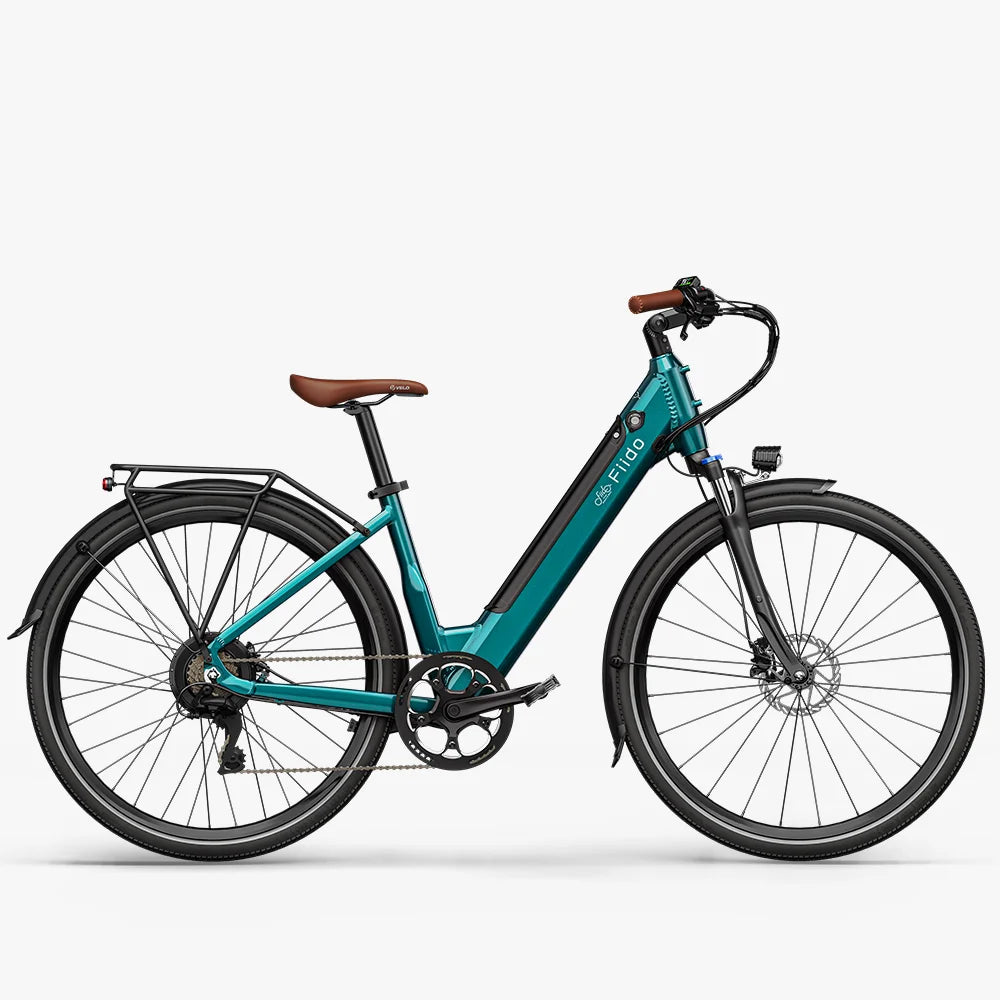
Fiido C11 Pro City E-bike
A powerhouse with a 400 km range and 4-piston brakes, ideal for hunting and fishing trips.
Reminder: Prices are subject to the product detail page ,some earlier card details may have been updated.
❄️ Winter Battery Capacity: What to Expect & How to Optimize
🧊 Winter Battery Optimization Tips
-
Pre-warm your battery by bringing it indoors the night before a cold-morning ride.
-
Use a neoprene battery sleeve or insulated wrap to maintain operating temperature during rides below 5°C.
-
Reduce Turbo/Boost use in the cold — high current draw accelerates voltage drop in cold cells, triggering premature low-battery cutoffs.
-
Never charge a frozen or near-frozen battery. Allow it to return to at least 10°C before plugging in to avoid lithium plating.
-
Store indoors between winter rides — do not leave the battery attached to a bike parked outdoors overnight in sub-zero temperatures.
Section 7: Compatibility — Are E-Bike Batteries Universal?
Fiido
High energy density, removable integrated design, standardised charging port. Widely adopted as a premium backup solution.
Trek
Proprietary Bosch or TQ-HPR50 system. OEM replacement required. No cross-brand physical compatibility.
Giant
Uses Giant-proprietary or Yamaha-based battery system. Locked to model-series compatibility.
Brompton
Uses a compact, fully bespoke front-mounted battery pack. Not cross-compatible with other brands.
✅ Key Takeaway on Compatibility

Section 8: Voltage — What Does 36V, 48V, 52V, 72V Mean? Which Is Better?
| Voltage | Typical Motor Power | Top Speed (Assisted) | Best Use Case | Pros / Cons |
|---|---|---|---|---|
| 36V | 250 – 350W | 25 km/h (15.5 mph) | Light city commuting, flat terrain, beginner e-bikes | ✅ Affordable, lightweight, most common entry point❌ Limited hill power, lower range at speed |
| 48V Most Popular | 500 – 750W | 25–32 km/h | City commuting, moderate hills, all-round versatility | ✅ Best balance of power, efficiency & range❌ Slightly heavier than 36V systems |
| 52V | 750 – 1,000W | 32–45 km/h | Performance commuting, hilly terrain, cargo e-bikes | ✅ ~15% more torque than 48V, faster acceleration❌ Higher cost, requires compatible motor & controller |
| 72V | 1,000 – 3,000W+ | 45–80+ km/h | High-performance e-bikes, off-road, speed bikes | ✅ Maximum power and top speed❌ Heavy, expensive, not road-legal in many regions (EU/UK 250W limit) |
⚠️ Voltage & Legal Compliance
Section 9: How to Extend E-Bike Battery Life (6 Pro Tips)
-
Stay Within the 20%–80% Charging Zone
This is the most impactful single habit you can adopt. Lithium-ion cells experience the least electrochemical stress when kept between 20% and 80% state of charge. Charging to 100% and draining to 0% regularly can reduce total cycle life by 30–40%. Set a charge limit in your e-bike app, or use a smart timer plug to stop charging automatically.
-
Always Charge at Room Temperature
Charge your battery between 15°C and 25°C (59–77°F). Charging in cold temperatures causes lithium plating — microscopic metallic deposits that permanently reduce capacity. In winter, bring the battery inside for at least 30 minutes before plugging in. Never charge in direct sunlight or a hot garage in summer either, as heat above 35°C during charging accelerates cell degradation.
-
Store at 60% Charge for Long Periods
If you won't ride for more than two to three weeks — during travel, seasonal storage, or winter — bring the battery to approximately 60% charge before storing it. This is the voltage "sweet spot" where lithium cells age most slowly in a static state. Check the charge every 1–2 months during storage and top back up to 60% if it has dropped below 40%.
-
Use Only Manufacturer-Approved Chargers
Third-party or universal chargers may supply incorrect voltage, current, or lack BMS handshake communication with your battery. Even small deviations in charge current over hundreds of cycles accelerate cell wear. The original charger is purpose-matched to your specific battery's chemistry and BMS parameters — it's one of the simplest ways to protect your investment.
-
Avoid Extreme Temperatures While Riding
Both extremes — above 40°C and below 0°C — negatively impact battery performance and longevity. In summer, avoid storing your e-bike in a black-painted shed or car trunk in direct sunlight. In winter, use an insulating battery cover and avoid extended Turbo mode use in freezing conditions, as high current draw combined with cold temperatures causes accelerated voltage sag and cell stress.
-
Inspect Contacts & Service Annually
Battery terminals and connector pins should be inspected every 6–12 months. Corrosion, dirt, or bent pins increase contact resistance, generating localised heat during charge and discharge cycles — a subtle but consistent contributor to cell degradation. Use a dry brush or isopropyl alcohol to clean contacts. Have your battery's capacity professionally tested annually if you rely on it for daily commuting.


