












Introduction|Why Range Numbers Often Disappoint Riders
Short answer: Many riders are surprised to find their long range electric bike delivers 30–40% less distance than advertised. The difference isn’t a defect — it comes from battery quality, motor efficiency, sensors, weight, and terrain. Understanding how these factors interact lets riders choose a bike that truly delivers predictable daily range.

For a deeper dive into how far long-range eBikes can actually go, what factors affect range, and tips to maximize it, check out our comprehensive pillar guide:
How Far Can Long Range Electric Bikes Go? Range Factors and Buying Tips (2026)
Battery, Motor, Sensors, and Design: How They Affect Real-World Range
Real-world range is rarely equal to the number advertised on the spec sheet. Several interacting factors — battery quality, motor efficiency, sensor systems, and bike design — determine how far you can actually ride. Understanding these systems helps you choose the right bike and optimize your rides.
Battery Size vs Real Energy Delivery
Battery capacity (Wh) sets the theoretical energy available, but actual range depends heavily on cell quality, BMS, and voltage stability under load.
-
Example: Two eBikes with 500 Wh batteries:
-
Bike A with high-quality cells and a smart BMS may deliver 60–70 km on a typical urban commute.
-
Bike B with cheaper cells and no advanced BMS may only reach 45–50 km, even though both advertise 500 Wh.
-
Tip: Look for detailed BMS specs, cell type (e.g., 18650 vs 21700), and independent range tests to estimate realistic distance.
Motor Efficiency Matters More Than Motor Power
High wattage alone doesn’t guarantee long range. Efficient long-range eBikes use:
-
Smooth power curves to reduce wasted energy.
-
Low internal resistance for steady cruising.
-
Intelligent power cut-off when full assistance is unnecessary.
-
Example: A 750 W hub motor without torque sensors may consume 30% more energy on flat terrain than a 500 W mid-drive with efficient torque sensing. For a 25 km/h commute over 1 hour, that can translate into 10–15 km less range.
Tip: Choose motors with torque sensors and proportional assist if you want consistent performance in mixed terrain or hilly areas.
Sensors and Control Systems: The Invisible Advantage
Torque and pedal-assist sensors control how much power the motor delivers based on rider input. Proper sensor systems prevent over-assistance and reduce energy waste, resulting in predictable battery consumption.
-
Bikes with cadence-only sensors may overdeliver power at low effort, draining the battery faster.
-
Bikes with torque sensors respond proportionally, giving smooth acceleration while preserving energy over long rides.
Tip: Check the eBike’s sensor type and adjust assist levels to balance speed and efficiency.
Weight, Aerodynamics, and Rolling Resistance
Even small design factors impact range:
-
Weight: Every extra kilogram increases energy demand during acceleration, climbing, and stop-and-go riding.
-
Tires: Low-pressure, knobby tires increase rolling resistance; smooth or semi-slick tires improve efficiency.
-
Riding posture: Aerodynamic position matters, especially above 30 km/h.
Tip: Remove unnecessary cargo, maintain tire pressure, and choose tires suitable for your terrain to maximize range.
At a Glance: How Each Factor Affects Range
| Factor | What it Affects | Practical Tip | Real-World Impact |
|---|---|---|---|
| Battery Quality (Wh + Cells) | Usable range | Check BMS, choose high-quality cells | +10–20 km per charge vs low-quality battery |
| Motor Efficiency (W + Torque Sensor) | Energy consumption | Use torque-sensor motor | Saves 15–30% energy on flat/steady rides |
| Sensors & Control | Over-assistance, predictable range | Adjust assist levels | Avoid sudden battery drops on long rides |
| Weight | Acceleration, climbing, stop-and-go | Reduce cargo, remove extras | 1–2 km lost per extra 5 kg |
| Tires & Aerodynamics | Rolling resistance, drag | Proper PSI, smooth tread | +5–10% range improvement on commutes |
✅ Key Takeaway:
Understanding how battery, motor, sensors, and design interact helps you predict real-world range, choose the right eBike for your needs, and optimize riding habits to get the most distance per charge.
Real-World Long Range Starts with the Right Bike
Understanding battery quality, motor efficiency, sensors, and bike design is key — but at the end of the day, choosing a bike that delivers on these factors makes the biggest difference.
For riders seeking dependable long-range performance in 2026, Fiido’s L3, Titan, and Nomads stand out:
| Model | Realistic Daily Range | Max Range (Optional Multi-Battery) | Best For | Key Advantage |
|---|---|---|---|---|
| Titan | 116 km | 348 km | Heavy-load commuting & adventure | Modular battery, high torque, consistent performance |
| Nomads | 79 km | 241 km | Extended city-suburb rides | Comfortable, efficient for longer rides |
These models don’t just promise distance — they deliver reliable, real-world range so you can ride with confidence every day.
Why Understanding This Matters
Long-range eBikes aren’t just about chasing big numbers on a spec sheet — they rely on how battery quality, motor efficiency, sensor systems, and bike design interact to produce real-world performance. Understanding these systems helps you make informed decisions and get the most out of your rides:
-
Battery Quality Determines Usable Range
-
Two bikes with the same 1000 Wh battery can deliver very different distances if one uses high-quality cells and a smart BMS, while the other has cheaper cells. Learning how battery management affects voltage under load helps you predict daily range.
-
-
Motor Efficiency Impacts Energy Use
-
A 750 W motor may look powerful, but if it has poor efficiency or no torque sensor, it wastes energy on flat roads. Knowing this helps you choose bikes with smooth, proportional assistance that extends range.
-
-
Sensors Control Consistency
-
Torque and pedal-assist sensors ensure power is applied only when needed. Bikes without them may over-assist and drain the battery faster. Understanding sensor types helps riders optimize assist levels for daily commutes or off-road trips.
-
-
Design Factors Affect Real-World Performance
-
Weight, tire choice, and aerodynamics all influence rolling resistance and climbing effort. A heavier bike with wide tires may reduce range even with a large battery. Knowing these trade-offs prevents surprises when riding hills or carrying cargo.
-
Example in Practice:
-
The Fiido Titan with a single battery can deliver ~116 km in real-world conditions thanks to high-efficiency motor + smart sensors + modular battery system. A similar-sized battery on a generic off-road eBike might only reach 70–80 km. Understanding these systems explains why.
Reliable Long-Range Performance with the Fiido Titan Triple Battery System
For riders who want maximum real-world range and load flexibility, the Fiido Titan offers a modular triple-battery setup that sets it apart from standard eBikes.
-
Single Battery: ~116 km (71.9 mi) in realistic commuting or mixed-terrain conditions.
-
Triple Battery Setup: Up to 348 km (216 mi), ideal for multi-day trips, heavy cargo, or off-road adventures.
-
Why It Works: High-quality cells combined with a smart Battery Management System (BMS) maintain stable voltage under load, ensuring that even on hilly terrain or fully loaded commutes, the bike delivers consistent performance.
Practical Advantage: Riders can choose a configuration that matches their needs: one battery for daily city commutes, or expand to three for long-range off-road or cargo-heavy rides. This modular design reduces charging frequency, minimizes range anxiety, and ensures that the Titan performs reliably regardless of terrain or load.
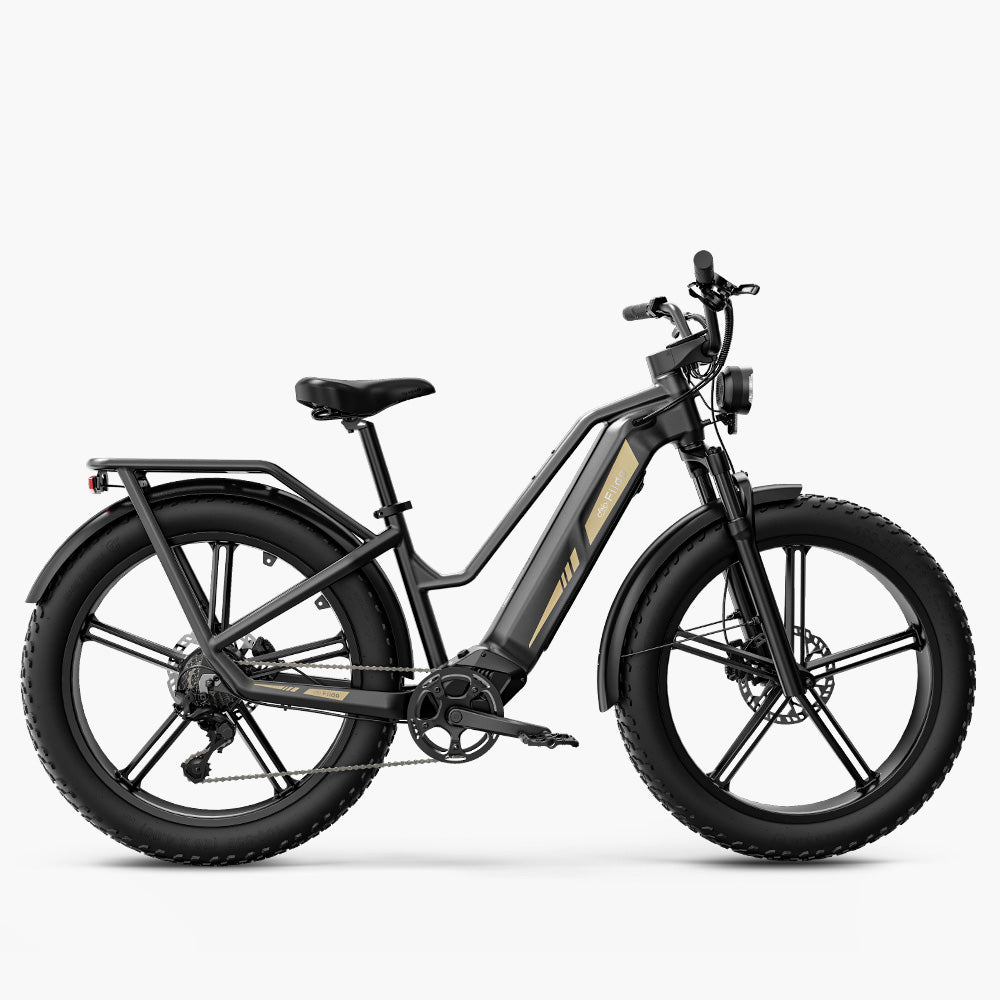
Titan Fat Tire Touring Ebike - Long Range
One of the worlds longest-range touring e-bikes, with superior cargo capability.
Reminder: Prices are subject to the product detail page ,some earlier card details may have been updated.
FAQ
| Question | Answer |
|---|---|
| Why does my electric bike go less far than advertised? | Real-world range is affected by battery quality, load, terrain, assist level, and efficiency of motor & sensors. |
| Does higher wattage mean longer range? | Not necessarily. Efficient power delivery, smooth torque curves, and sensor control matter more than peak wattage. |
| How can I maximize range on a commute? | Maintain battery, keep tires properly inflated, minimize extra weight, use pedal-assist wisely, and plan charging stops. |
| Which Fiido model delivers the most predictable range? | Titan for heavy-load/adventure, Nomads for extended city-suburb rides. |
| Can I ride in winter or rainy conditions? | Yes, but avoid extreme cold for charging and dry the bike after wet rides to maintain electronics and drivetrain. |


