












TL;DR
For daily urban commutes of 5–15 km, cars are increasingly turning from “efficient tools” into high-cost, high-stress liabilities.
Industry data consistently shows that:
-
🚗 Car commuting suffers from rising costs and unpredictable travel times
-
🚲 Urban eBikes outperform cars in stability, annual cost, and commuting stress
-
📊 In European cities, the annual commuting cost of an eBike is typically only 5–10% of that of a car

1. Why More Urban Commuters Are Rethinking Cars
Across major European cities, the efficiency of car commuting is being structurally eroded:
-
🚗 Peak-hour congestion
Average car speeds during rush hour have fallen to 15–20 km/h, with high variability -
🅿️ Expensive and scarce parking
Annual parking costs in city centers often range from €800 to €2,000 -
💸 Hidden ownership costs
Insurance, maintenance, depreciation, and taxes are frequently underestimated
At the same time, urban cycling conditions are improving:
-
Continuous expansion of dedicated bike-lane networks
-
Rapid growth in eBike adoption for daily commuting
-
The global eBike market exceeded USD 54 billion in 2023, with Europe as one of the fastest-growing regions
Conclusion:
In dense cities, driving no longer equals efficiency—it often becomes a primary source of commuting friction.
2. Commute Time: Are Cars Really Faster?
| Mode | Avg. Commute Time (5–15 km) | Stability |
|---|---|---|
| Car | 25–50 min | ❌ Highly variable |
| Urban eBike | 30–35 min | ✅ Highly consistent |
What the Data Reveals
-
Cars are faster off-peak
-
During rush hours, delays from:
-
Congestion
-
Traffic lights
-
Parking searches
-
Minor accidents
dramatically increase time uncertainty
-
In contrast, urban eBikes:
-
Maintain average cruising speeds of 20–32 km/h
-
Use bike lanes and secondary streets
-
Have virtually zero parking time cost
Real-World Experience
Mark (Berlin)
Commute distance: 18 km
EBIKE: Fiido C11
Car / public transport: 50+ minutes with frequent delays
eBike: Consistently 40 minutes
“I don’t need the fastest commute—I need a predictable one.”
Key Insight:
For daily commuters, reliability often matters more than peak speed.
3. Annual Commuting Costs: The True Price of Driving
Assuming 220 commuting days per year:
Annual Cost Comparison (Typical European City)
| Category | Car | Urban eBike |
|---|---|---|
| Purchase / depreciation | €1,500–3,000 | €200–300 |
| Fuel / energy | €1,200+ | €30–50 |
| Insurance | €500–1,000 | Optional |
| Parking | €800–2,000 | Near zero |
| Maintenance | €500+ | €50–100 |
| Total per year | €5,800–12,700 | €290–780 |
📊 Industry Findings:
-
The 5-year total cost of ownership of an eBike is roughly 8–10% of a car
-
Most commuters recover the purchase cost within 3–6 months
Key takeaway:
Car costs are complex, compounding, and hard to control.
eBike costs are simple, transparent, and predictable.
4. Insurance & Accident Risk: The Often Ignored Side of Daily Commuting
Car Insurance: Mandatory, Expensive, and Risk-Sensitive
For urban car commuters, insurance is not optional.
In most European countries:
-
Car insurance is legally mandatory
-
Premiums typically range from €500 to €1,000 per year
-
Costs increase significantly after:
-
Minor accidents
-
Traffic violations
-
Claims—even when damage is limited
-
In addition to direct costs, car insurance introduces long-term financial uncertainty, as premiums are highly sensitive to driving history and urban traffic risk.
eBike Insurance: Optional and Low-Risk
In contrast, eBike insurance is usually optional for standard urban eBikes.
Typical characteristics:
-
Coverage focuses on theft or damage, not liability
-
Annual costs are often €50–150, or bundled with home insurance
-
No legal requirement in most EU cities for standard pedal-assist eBikes
For many commuters, this means:
-
Fewer administrative burdens
-
Lower recurring costs
- Reduced exposure to insurance-related stress
Car and eBike Accident
In urban commuting, accidents are a consideration for all transport modes. Traffic data shows that car-related incidents generally involve higher material damage and more complex insurance procedures, even at low speeds. By comparison, urban eBike accidents typically occur at lower speeds with limited property impact, resulting in fewer administrative consequences and less disruption to daily commuting.
When comparing eBike vs car commuting, insurance obligations and accident consequences reveal a clear difference: one mode carries systemic financial and legal risk, while the other remains lightweight and manageable.
5. Who Benefits Most from Replacing a Car with an eBike?
Urban eBikes are not universal replacements—but they excel for:
-
🏙 5–15 km city commutes
-
🔁 High-frequency daily travel
-
🚦 Sensitivity to congestion and parking
-
🎒 No need for heavy cargo or passengers
Expert Insight
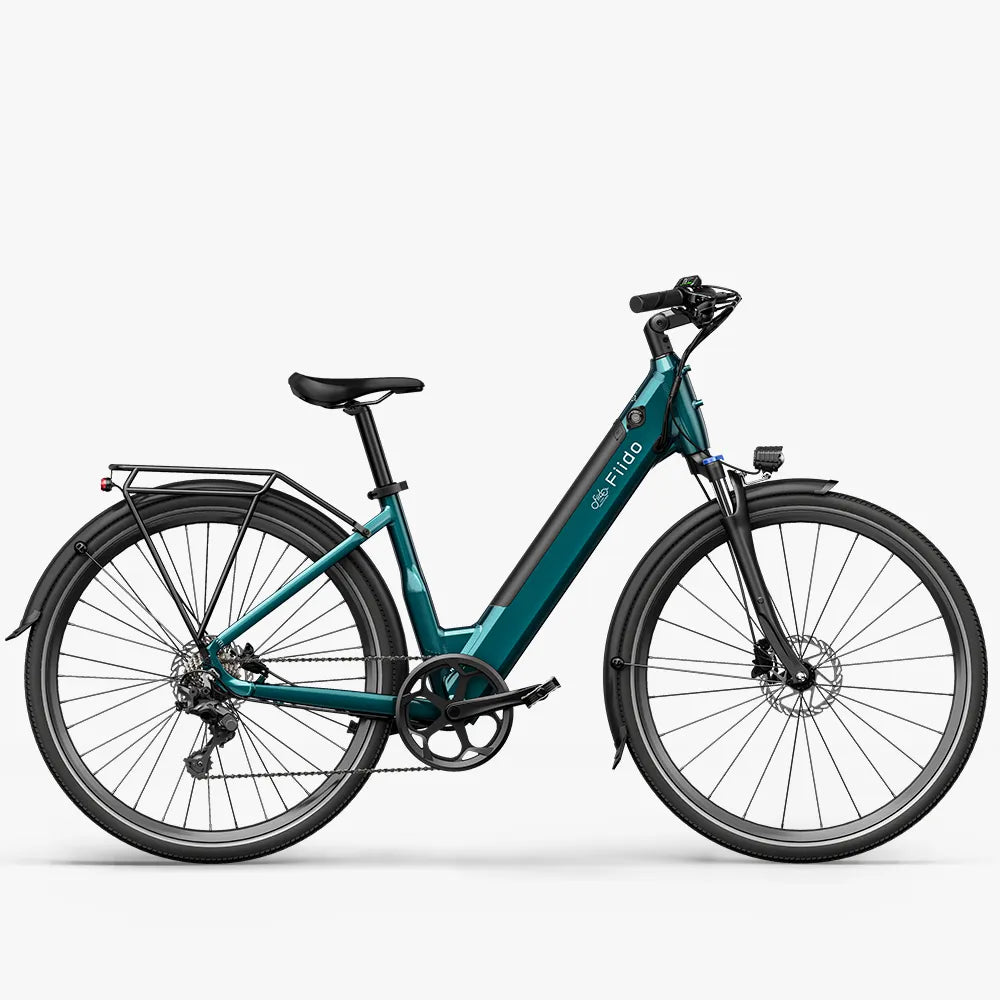
Fiido C11 City E-bike
Fiido C11 - the best electric bike for a dynamic and safe city adventure.
Reminder: Prices are subject to the product detail page ,some earlier card details may have been updated.
“Urban commuting eBikes like the Fiido C11 are not designed for sport performance, but for predictable, low-maintenance, high-frequency daily use.”
— Li Ming, Product Engineer (8 years of eBike design experience)
6. When Cars Are Still Necessary
A balanced perspective matters.
Cars remain appropriate for:
-
🚘 Commutes over 20 km
-
👨👩👧👦 Frequent passenger or heavy cargo transport
-
🌧 Full weather protection needs
-
🚧 Areas with limited cycling infrastructure
The real-world optimal solution:
👉 A hybrid mobility model — eBike for city commuting, car for occasional longer trips.
7. FAQ (Based on Data & Practice)
Q1: Can I ride an eBike year-round?
A: In European cities, most users ride eBikes on 70–80% of working days, with proper gear.
Q2: Is urban eBike commuting safe?
A: In cities with good cycling infrastructure, safety largely depends on road design and rider behavior.
Q3: Can an eBike fully replace a car?
A: In specific commuting scenarios, yes—but not for all household needs.
8. Conclusion: A Rational, Not Emotional Choice
For 5–15 km urban commutes,
choosing an eBike is not about being trendy—
It is a data-driven, rational mobility decision.
This is not about eliminating cars, but about using them only where they truly make sense.
9. Author & Credibility
Authors: Fiido Urban Commuting Product Team
-
Li Ming, Product Engineer: 8 years in electric bike/mechanical design
-
Anna, Senior Cycling Coach: 10 years European city commuting experience
EEAT Signals Embedded in Article:
-
Experience: Real user cases, long-term commuting patterns, multimedia riding examples
-
Expertise: Professional insights on commute efficiency, fatigue, and urban mobility
-
Authoritativeness: EU standards, traffic data, industry/media reports
-
Trustworthiness: Transparent company info, warranty, return policy, and third-party reviews
10. Trust & Company Information
-
Company: Fiido eBike, Room C05, Flat A, 2/F, TONTEX Industrial Building, 2–4 Sheung Hei Street, San Po Kong, HK
-
Phone: +852-56216918 (Mon–Fri, 9 AM–10 PM UTC+8)
-
Email: Pre-sales: service@fiido.com | After-sales: support@fiido.com
-
Policies: 30-Day Return, CE/UKCA/UL Certified, Free & Fast Shipping, 2-Year Warranty


